
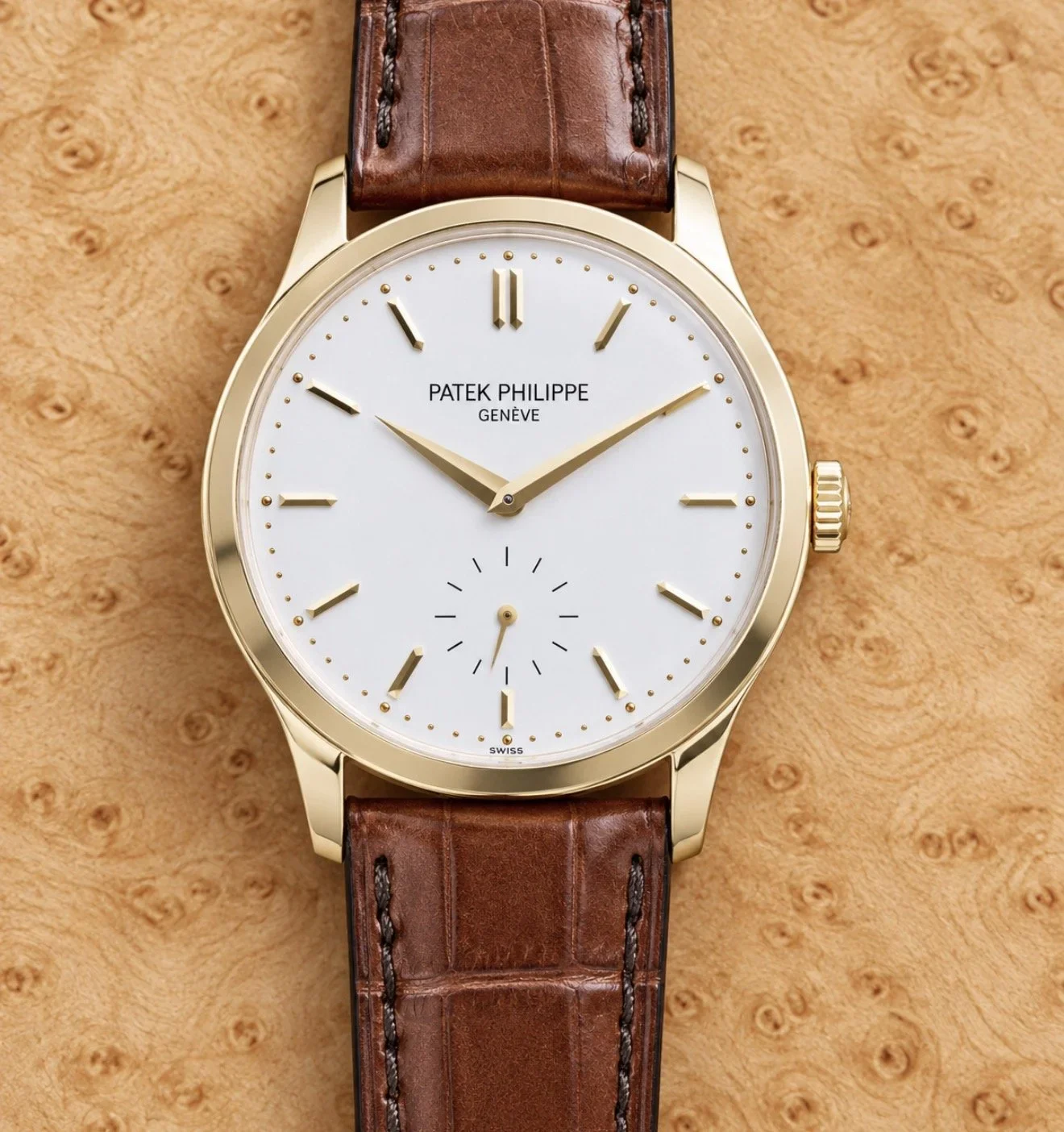
Some watches earn their reputation through complications. Others earn it by doing almost nothing at all, and doing it perfectly. The 5196J-001 belongs firmly in the second category — it's Patek Philippe's Calatrava stripped back to the idea that started the whole collection, and it remains one of the clearest examples of why restraint is its own kind of luxury.
A Design That Goes Back to 1932
The Calatrava name traces directly to reference 96, the watch Patek Philippe introduced in 1932 that established the collection's entire design language: a clean round case, a simple dial, thin dauphine hands, and no ornamentation competing for attention. The 5196 arrived in 2004 as the successor to reference 3796, the 31mm model Patek had kept as close to the original 96 as possible. It's a rare thing in luxury watchmaking — a design considered so correct that Patek has spent nearly a century refining it rather than replacing it.
The 5196J-001, Specifically
This reference is cased in 18k yellow gold at 37mm — larger than the 31mm 3796 it replaced, and Patek's way of carrying classic Calatrava proportions onto a modern wrist. The dial is a silvered opaline finish with applied yellow gold hour markers and dauphine hands to match. A small seconds subdial sits at six o'clock, the only real interruption on an otherwise uncluttered face. The case back is solid and closed, keeping with the model's understated character rather than putting the movement on display.
The Movement
Inside is the caliber 215 PS, a hand-wound movement built specifically for this slim, classical case. A few details worth knowing:
18 jewels across 130 components, finished with Côtes de Genève decoration.
Gyromax balance; later production uses Patek's silicon Spiromax balance spring.
Runs at 28,800 vibrations per hour (4Hz).
Roughly 44 hours of power reserve on a full wind.
Carries the Patek Philippe Seal.
It's a manual-wind movement in an era when most watches have gone automatic, and that's part of the appeal — winding the 5196 each morning is a small ritual that connects the watch to an older, more deliberate way of wearing a timepiece.
Why Collectors Return to This Reference
It's the most direct modern link to the original 1932 Calatrava, reference 96.
37mm updates the classic proportions for today's wrist without chasing oversized case trends.
The hand-wound caliber 215 PS is a genuine dress-watch movement, built for slimness and finish rather than convenience features.
It works equally well as an entry point into serious Patek collecting or as a quiet daily watch for someone who already owns louder ones.
What to Look For When Buying
As with any pre-owned Patek, the details determine whether a piece is a good buy:
Confirm the Certificate of Origin and, ideally, the original box are present.
Check the dial's opaline finish for scratches or refinishing, which can dull the original texture.
Match the movement to the production year — later examples carry the Spiromax balance spring, and the caliber details should agree with the papers.
Ask about service history — hand-wound movements benefit from a regular winding and servicing schedule.
Inspect the strap and tang buckle, commonly replaced over the watch's life and worth confirming are correct for the reference.
Verify case, dial, and movement signatures and serial numbers are consistent and unaltered.
A Watch That Doesn't Need to Prove Anything
The 5196J-001 isn't for someone trying to impress a room. It's for someone who already understands what they're wearing, and would rather the watch stay quiet about it. If you're researching this reference or want to see one in person, I'm glad to walk through it with you by appointment.
Coleman E. Adler III is a private jeweler in New Orleans specializing in fine watches, diamonds, and estate jewelry, available by appointment.
